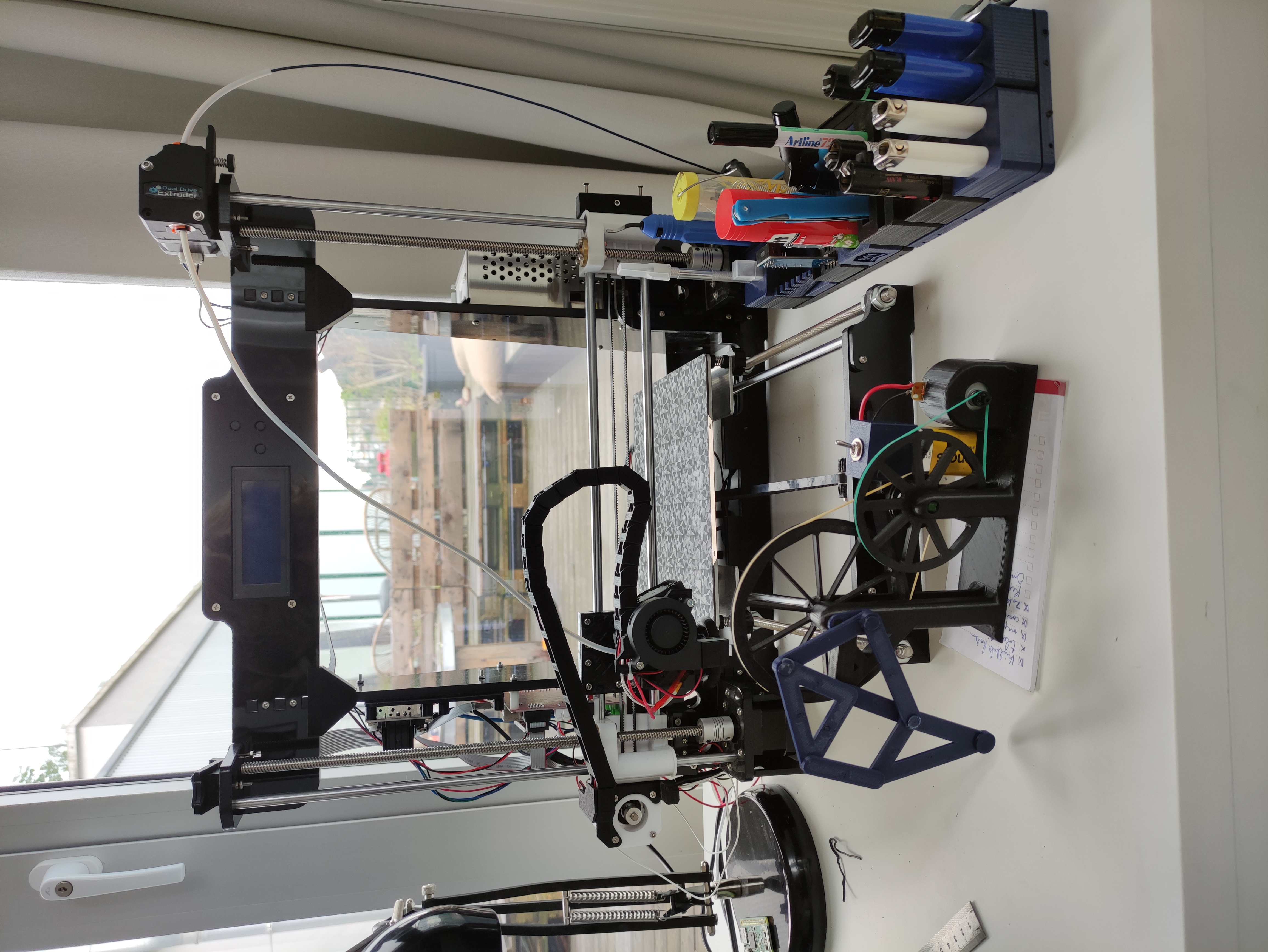
During my studies at Odisee, 3D printing was making a lot of advancements and became more accessible than ever. To get us familiar with the technology, we were given an assignment to build a moving mechanism out of 3D printed parts. I decided to model mine after a Strandbeest , a type of wind powered moving sculpture made by Dutch artist Theo Jansen.
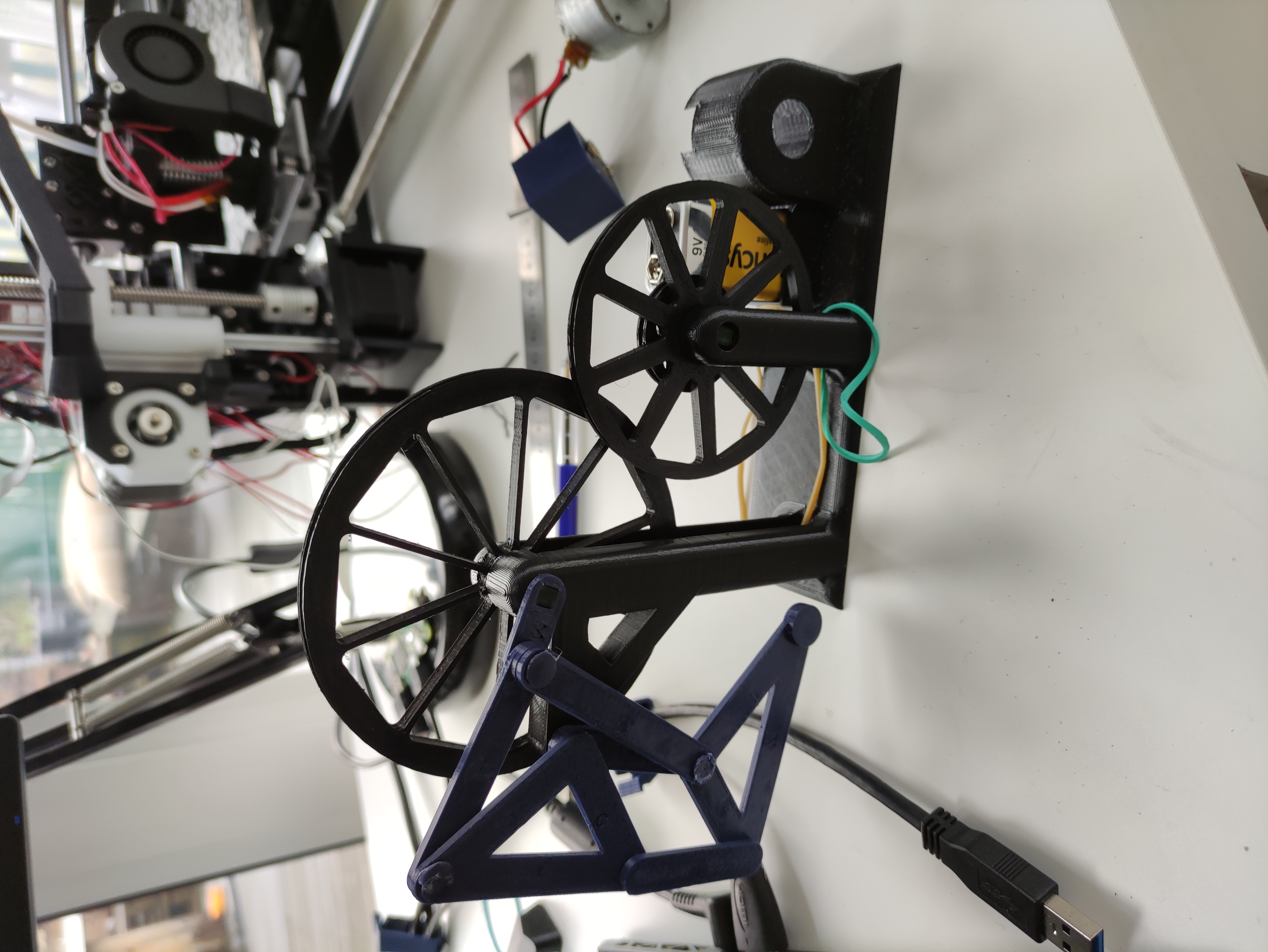
My Strandbeest leg would be powered by a 9V battery and a motor I salvaged out of an old VHS player. As the speed of the motor was unknown and I had no way of measuring it, I ended up printing a bunch of different pulleys to figure out an optimal speed. For “belts” I used rubber bands which would slip whenever the mechanism got stuck, ensuring it didn’t get destroyed.

The leg mechanism was printed as numbered flat sticks with a variety of axis and hole configurations. To keep everything as light and compact as possible, using any form of hardware to attach the pieces was out of the question as this would instantly add too much bulk and weight.
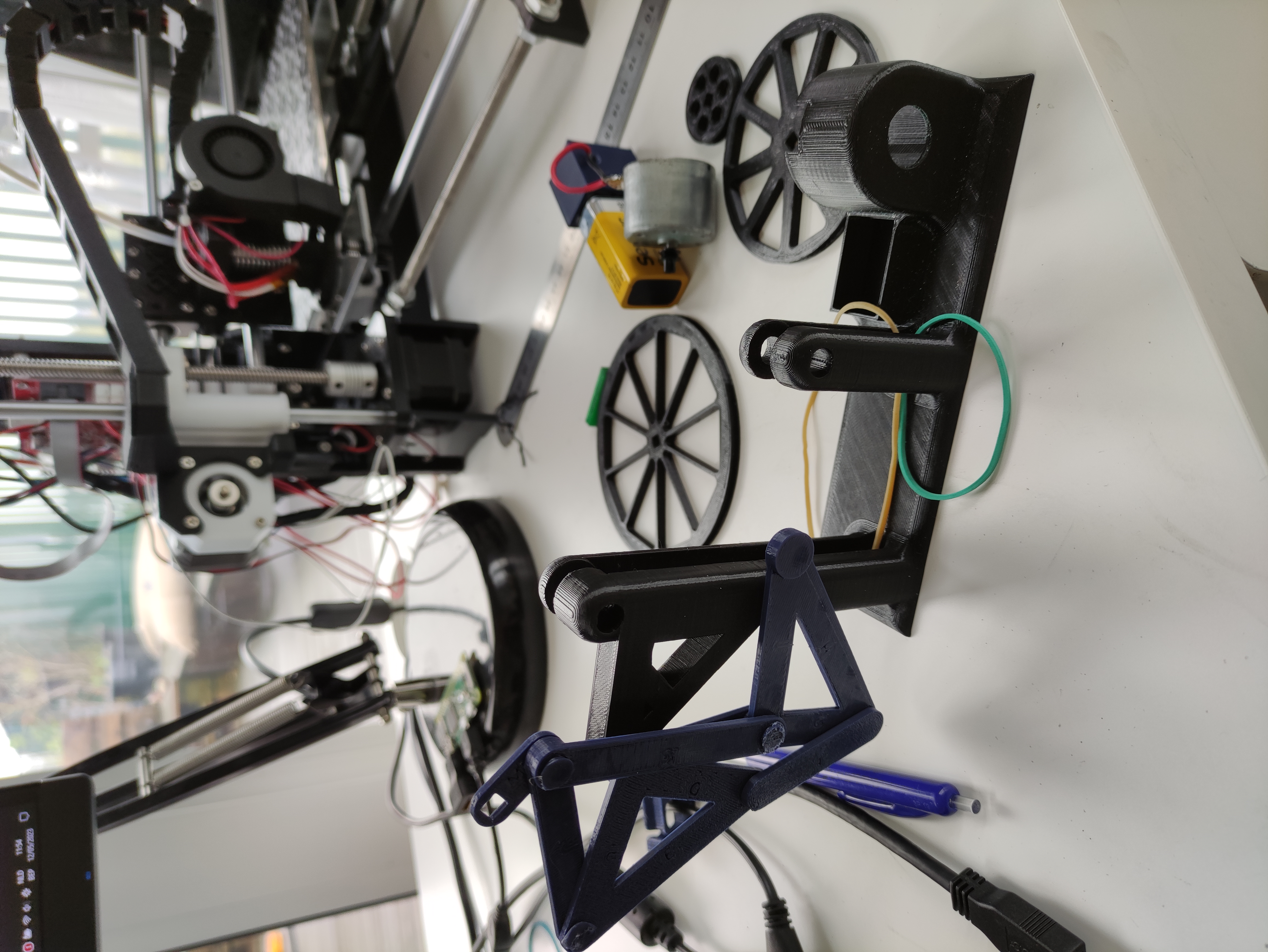
I instead opted to experiment by making the axes stick out a bit on purpose, and then after attaching the correct parts, melting the axes flat with a hot knife in order to seal it up. It definitely took a bit of trial and error to get good results, but this design choice allowed the mechanism to stay compact, light and made out of nothing but biodegradable PLA.
Nowadays commercial 3D printers are able to hit much tighter tolerances, so this mechanism could be quite easily redesigned to be print-in-place.
Unfortunately I don’t have any footage of the mechanism action as I donated it to my lecturers to use as a display model.